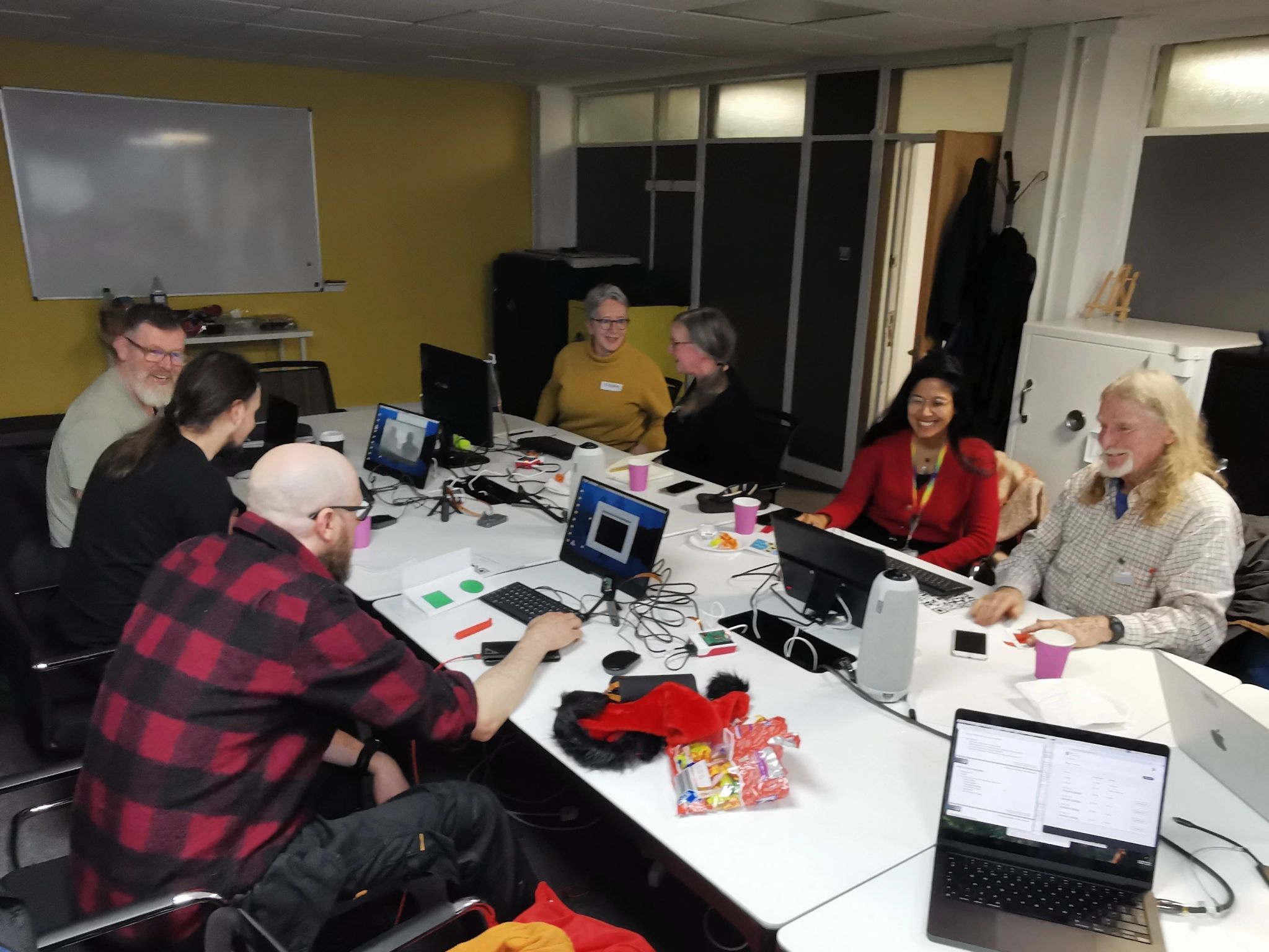
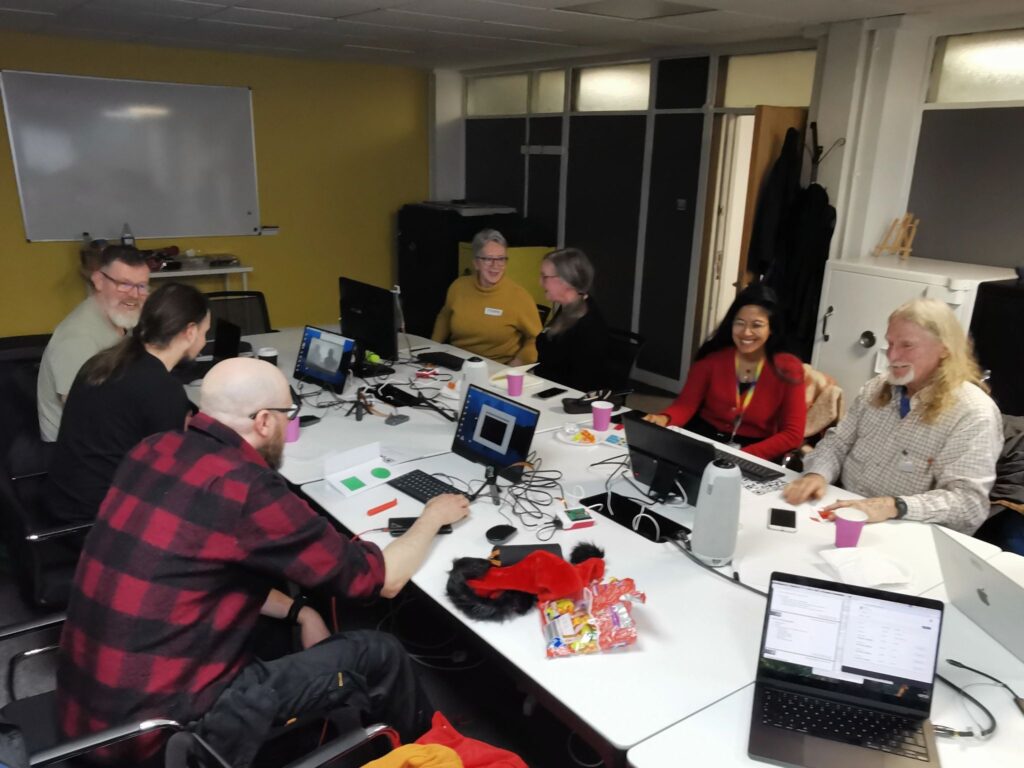
My first “Data-Driven Theatre & Art with Raspberry Pi” workshop took place on Dec 5th 2025 at CodeBase Edinburgh, co-hosted with Clare Duffy from Civic Digits C.I.C.
The session brought together a small group of theatre-makers, artists, technologists, and people working across disciplines. The focus was on how small, affordable computing systems can sense live inputs, such as faces, gestures, movement, sound, and simple biometrics, and use those signals to influence what happens in a performance or installation setting.
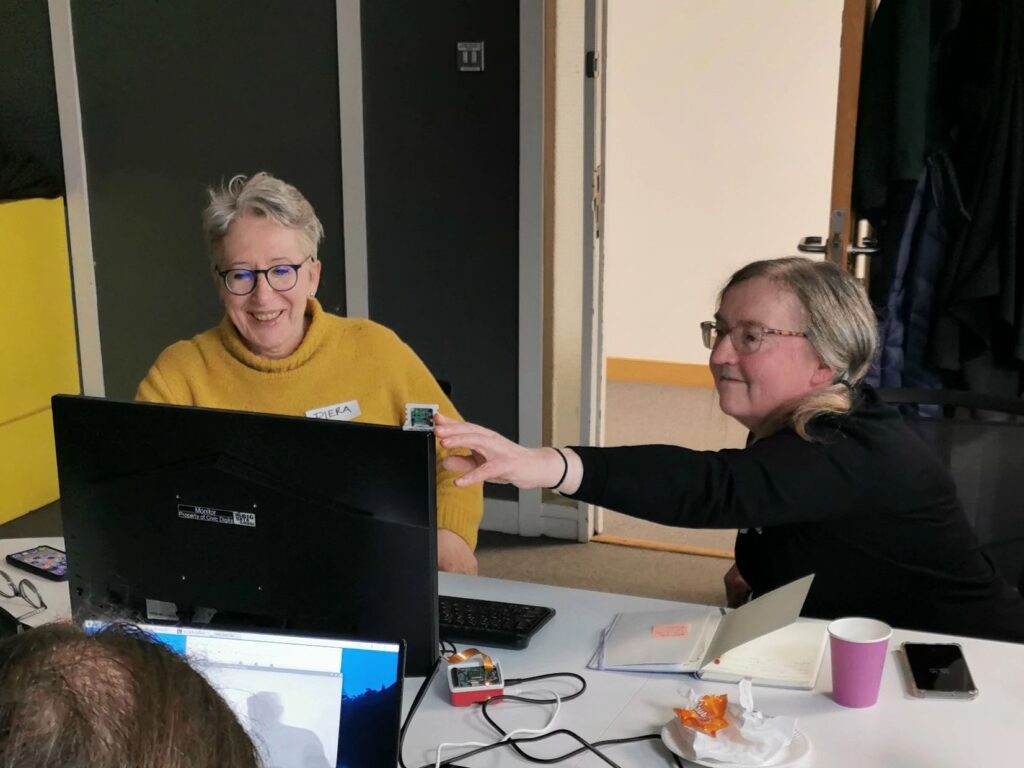
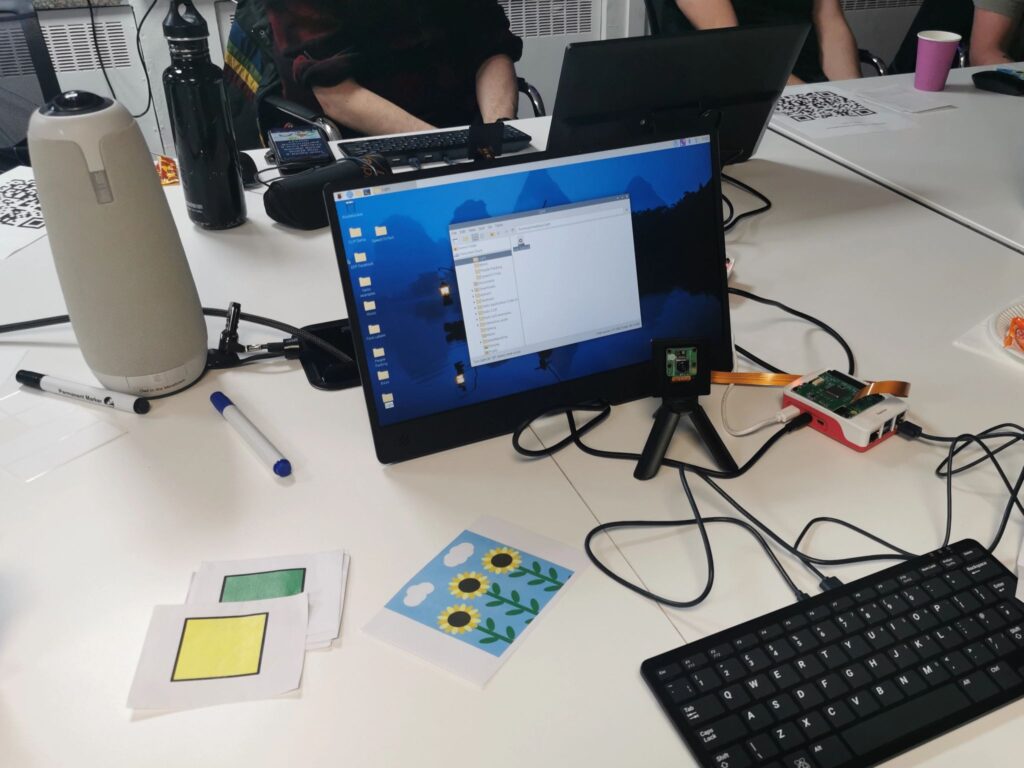
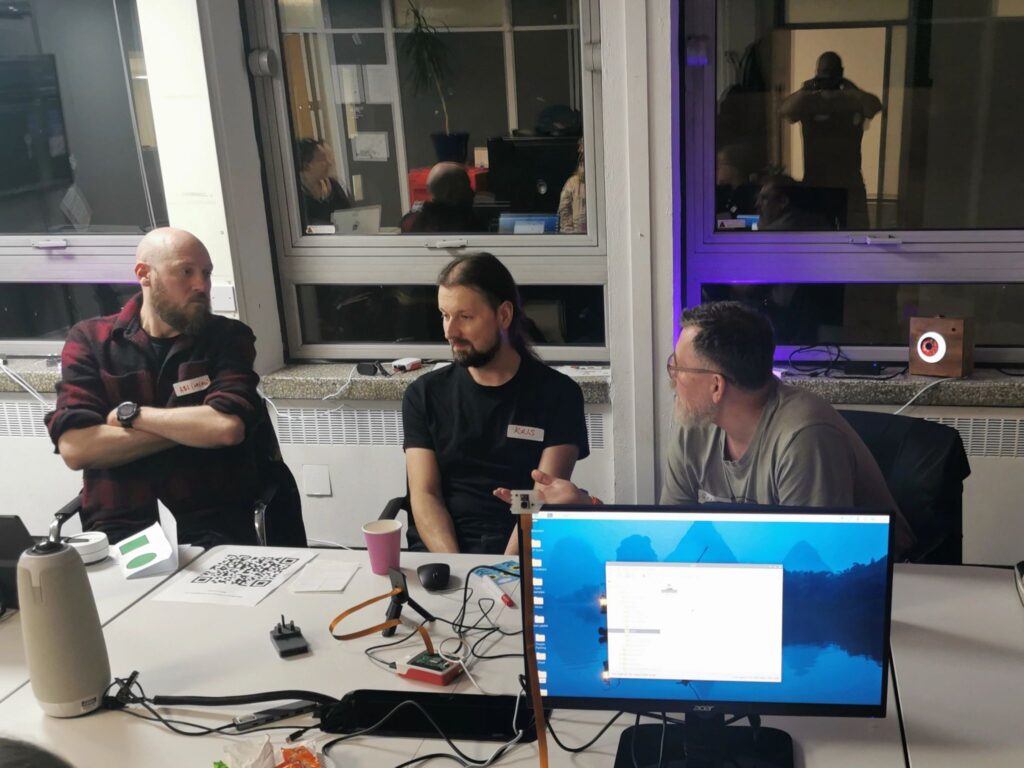
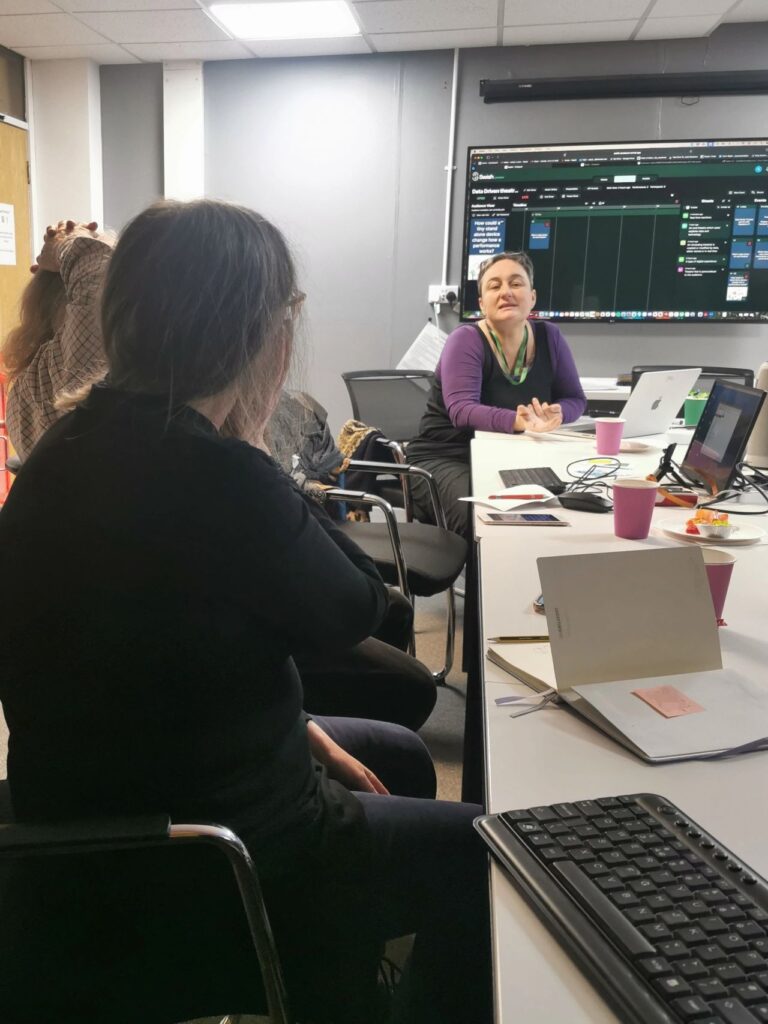
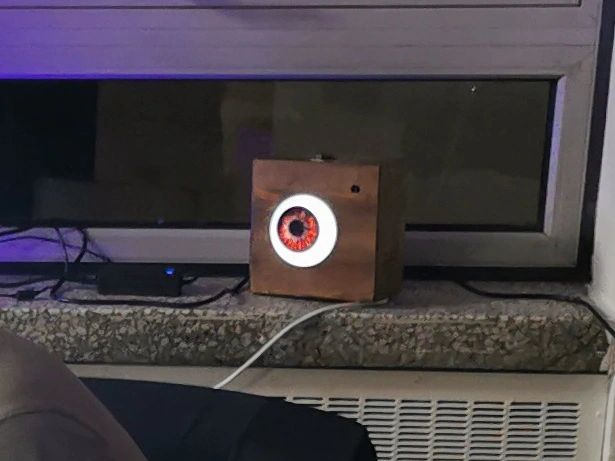
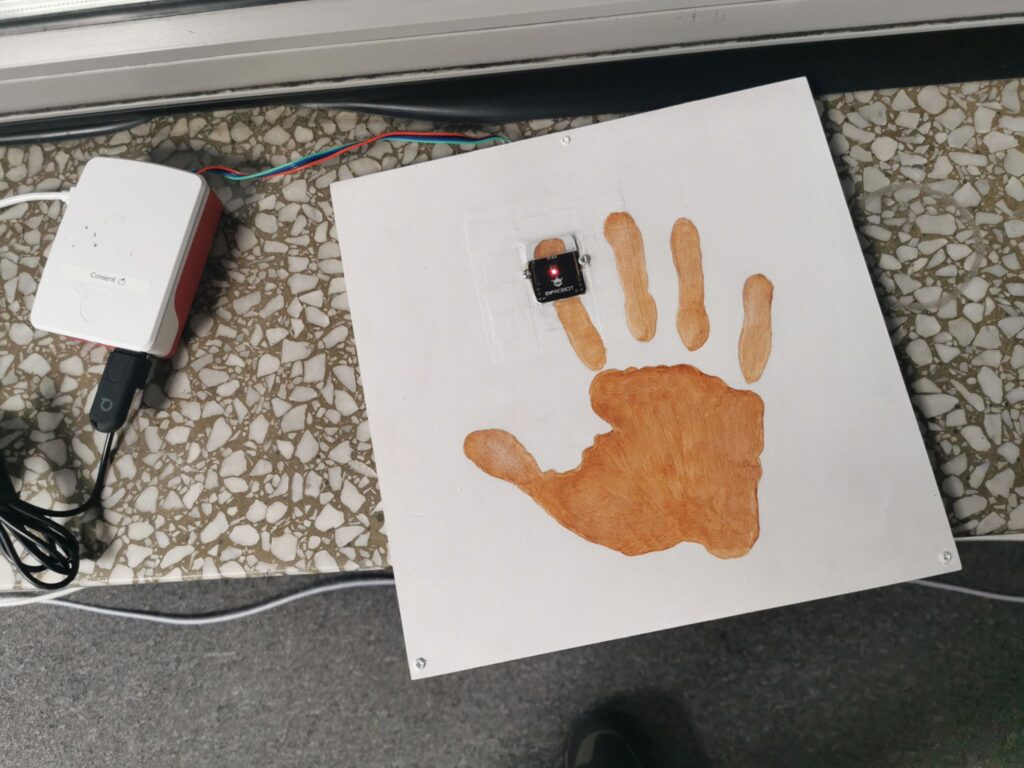
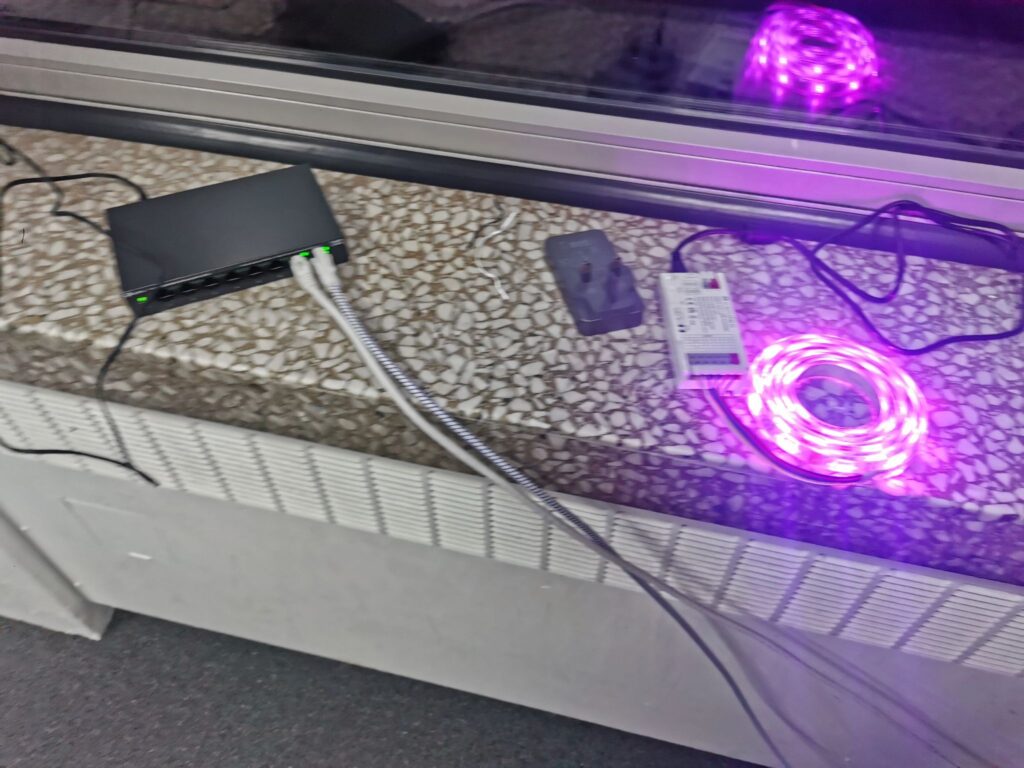
The workshop grew directly out of work developed for EXPOS3D, a large-scale interactive exhibition by artist Trevor Jones shown at Custom House, Leith. That exhibition made extensive use of Raspberry Pi based systems distributed throughout the space, handling sensing, control, and audience interaction.
Having recently finished running EXPOS3D, I had access to a significant amount of Raspberry Pi hardware that had already been built, tested, and used in a live exhibition context. Rather than packing that equipment away, the workshop became a practical way to reuse it and open those systems up so others could experiment with them directly.
A few days after the workshop took place, I learned that EXPOS3D had been formally recognised in a motion at the Scottish Parliament. The motion acknowledges Trevor Jones work and the exhibition’s role in exploring the intersection of contemporary art and emerging technologies. It was a welcome marker of the wider context in which the technical work discussed during the workshop had been developed.
The session itself moved between short presentations, live demonstrations, and hands-on work. The workshop slides set out a working definition of data-driven art and theatre, gave examples of artists and productions using live data and sensing, and outlined how Raspberry Pi systems had been deployed within EXPOS3D. There was also a practical introduction to machine learning in this context, focused on detection, classification, tracking, and expression or gesture recognition rather than generative AI.
At several points we used Swish, developed by Civic Digits, to pose questions during the session. Participants responded using their own phones, allowing input to be gathered quickly without stopping the flow of activity.
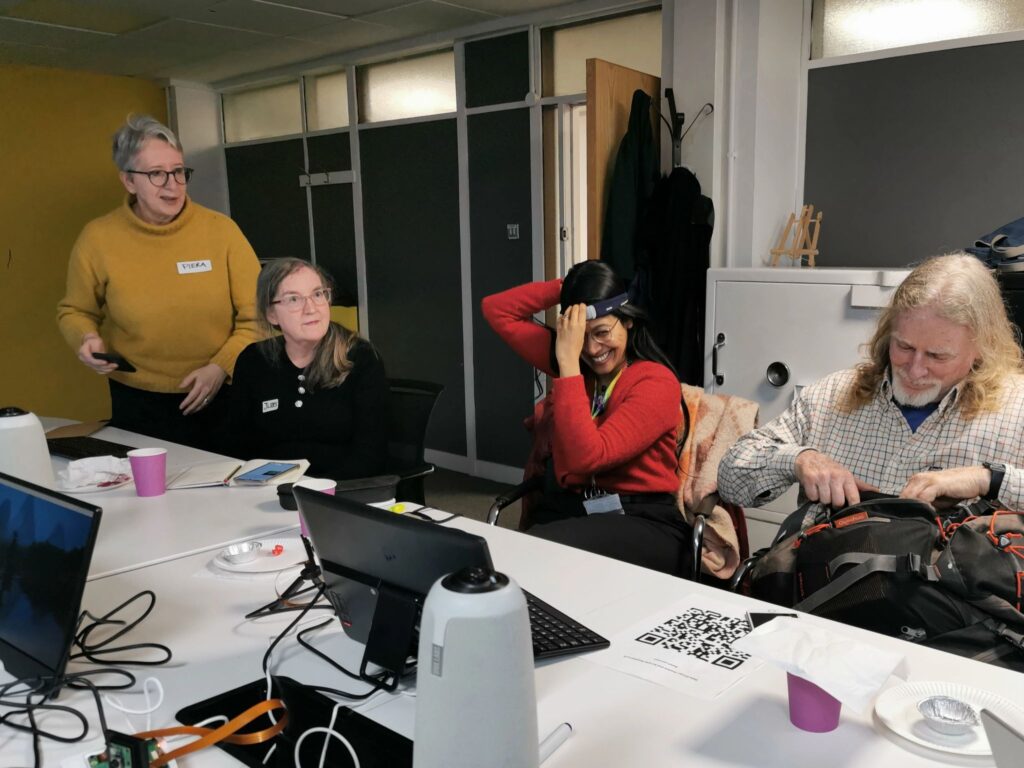
Live demonstrations were run on a laptop to show person detection and segmentation, hand pose tracking, face and body pose detection, emotion estimation, and simple gesture-driven sound and visual responses. After that, participants worked directly with Raspberry Pi 5 systems equipped with cameras and pre-built scripts. These systems were configured to run locally, without reliance on cloud services, to demonstrate how they can function as standalone edge compute units embedded within artworks, props, or environments.
Alongside the practical work, time was deliberately left unstructured. At points, some people continued experimenting with the hardware while others talked amongst themselves or moved between setups.
This workshop connected directly to my exhibition Bridging Worlds, which ran from 3 to 8 January 2026 in Edinburgh. Several Raspberry Pi based systems developed through this work were installed in the gallery as part of interactive artworks and small games.
Posted: January 11, 2026 by David Oxley
Written by

David Oxley
You may also be interested in:
Sphaerosymphony - the music of the air
Sphaerosymphony is an ongoing project where air quality data is turned into sound and evolving visual form. It’s not using simulated data or abstract inputs – it’s driven by real
When a Queue Forms
At the recent HelloArt Lunar New Year Market at Out of the Blue Drill Hall, I presented a selection of prints, merch, and my coffee/art collaboration. Additionally, I had an
Bridging Worlds: After the Exhibition
My first solo show, Bridging Worlds, just wrapped up at Whitespace Gallery in Edinburgh (3 – 8 January 2026). It was a real thrill to bring together pieces from different
BRIDGING WORLDS
From Saturday 3rd - Thursday 8th January 2026, Bridging Worlds brings together a constellation of generative, data-driven, and immersive artworks that sit at the intersection of the physical, digital, and imagined.
EXPOS3D: The Art of the System
Building Trevor Jones’ Digital Revolution The core of EXPOS3D was always clear: surveillance, data capture, and participation under observation. The exhibition invited visitors into a space where technology not only
Chaos, Code, and Creativity: My Journey
My fascination with patterns and chaos theory began in the early 1990s with a Commodore Amiga, AMOS Basic, and magazine cover disks that included tools like fractal generators. Inspired by
Exhibition: Perfectly Packed Pearls
I’m excited to share that my exhibition, Perfectly Packed Pearls, is showing in Edinburgh from 11th July to 15th August 2025 at Society Cycles, Morningside. If you’re in Edinburgh, you
NFC Lisbon 2025
Just back from Non Fungible Conference Lisbon. I didn’t go to speak or show work – just to see what’s happening at the intersection of immersive digital art, AI, NFTs,
🌈 Harmonious Diversity - Selected for “Living Colors” at Brooklyn Art Cave
I’m proud to announce that my generative artwork Harmonious Diversity has been selected for Living Colors, Brooklyn Art Cave’s 4th Annual Group Exhibition curated by Alex Z. Running from April